Bringing History to Life: Preparing the LMS 3F “Jinty” for the SVR 1940s Weekend
At the Severn Valley Railway, our volunteers are the heartbeat of everything we do. From keeping the locomotives steaming to ensuring our stations stay welcoming and our services run smoothly, their dedication powers the entire line. Following our much-loved “Step Back to the 1940s” weekends, we invited volunteer Tom Clarke to share a behind-the-scenes look at how he prepared the LMS 3F “Jinty” for this special event. His story offers a fascinating glimpse into the passion and effort that bring our heritage railway to life:
I’ve pretty much grown up with the Severn Valley Railway’s 1940s weekends – it’s even how I met my wife. For the past 25 years, I’ve been involved in setting up, taking down, and helping out during the event. I also spent several wonderful years on the organising committee, and during that time, I had the idea to use some of our out-of-ticket locomotives in the dock platform at Kidderminster as the centrepiece of an era-appropriate display.
This initiative began in 2017 with 5764, which featured a spark arrestor chimney kindly loaned from Didcot. In 2018, 8F 48773 was transformed into its War Department guise as No. 307, complete with a mock air brake pump and air tanks. Then in 2019, 7325 appeared in a weathered, unlettered lined green livery, reminiscent of its role in the 1940s-set film “Goodnight Mr Tom”.
After that appearance, life took a turn. The COVID pandemic coincided with my wife becoming quite unwell, so I stepped back from organising. However, I’ve remained involved and supportive at every event since. Fast forward to 2025, and this year my wife Dawn is much better and now part of the organising committee for the event. I’ve joined her “sub committee” and was asked if there was anything appropriate for display, the choices being 7325 again or do something with “Jinty” 47383.
My initial thought would’ve been a temporary re-lettering into LMS livery, but then I recalled that some Jinties were exported to France during the war effort. This sparked a deep dive into some research – digging out photographs as well as online archives and in books, to uncover this history and to successfully recreate one of these inspirational locos.

I discovered that eight LMS 3F “Jinties” were purchased by the War Department at £3,100 each and shipped to France in March 1940. These were steam-brake-only engines, not fitted with vacuum train brakes. Five survived the war and were repatriated in 1948, repaired at Derby, and reinstated into British Railways service.
According to records from the No. 1 Railway Operating Group of the Royal Engineers, based in Rennes, all eight locomotives arrived at Calais and were quickly put to work:
- Two were sent to the Romescamps complex of ammunition depots, camps, and hospitals to work the “Triage.” These were later evacuated to Brittany during retreat.
- Two were sent to the docks at St Nazaire.
- The remaining four were used for shunting in yards at St Nazaire, St Malo, and Rennes. One was even employed by the Royal Observer Corps at Bruz, just south of Rennes.
Sadly, during the evacuation of France, the whereabouts of three locomotives were lost to history. There were unconfirmed sightings of at least one post-war among a line of abandoned engines on the German side of the border. The five that were recovered after D-Day eventually returned to the UK, and put back into use.
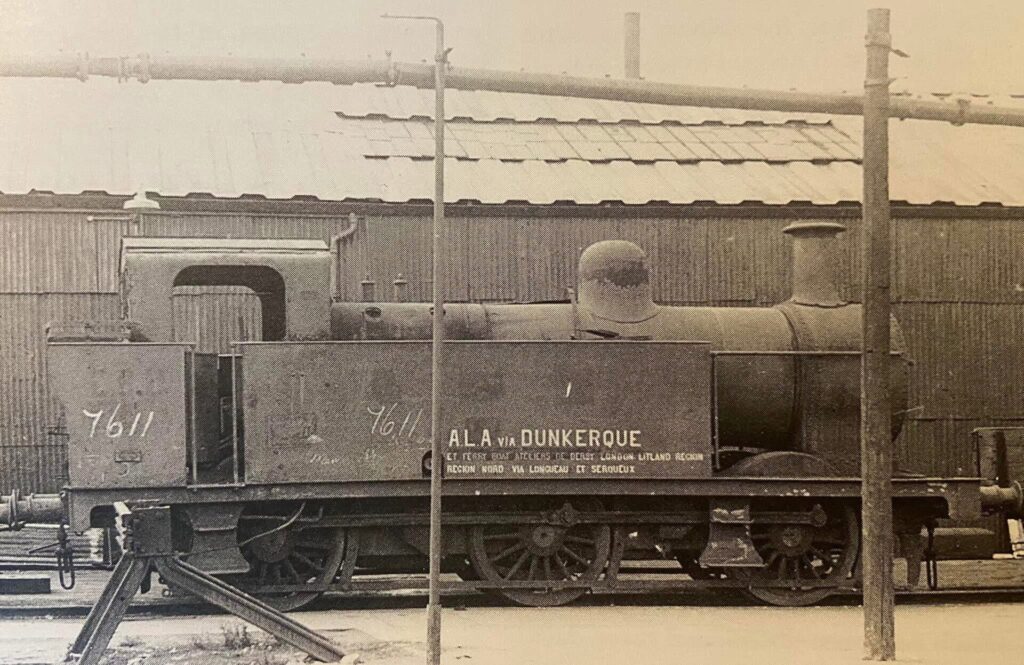
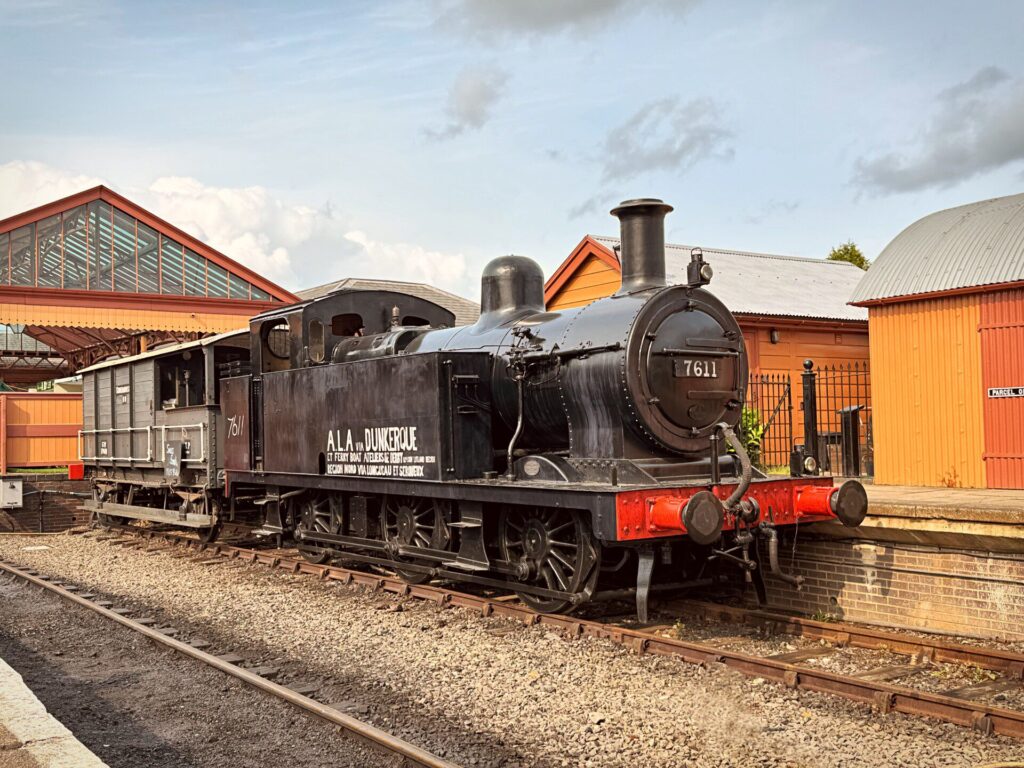
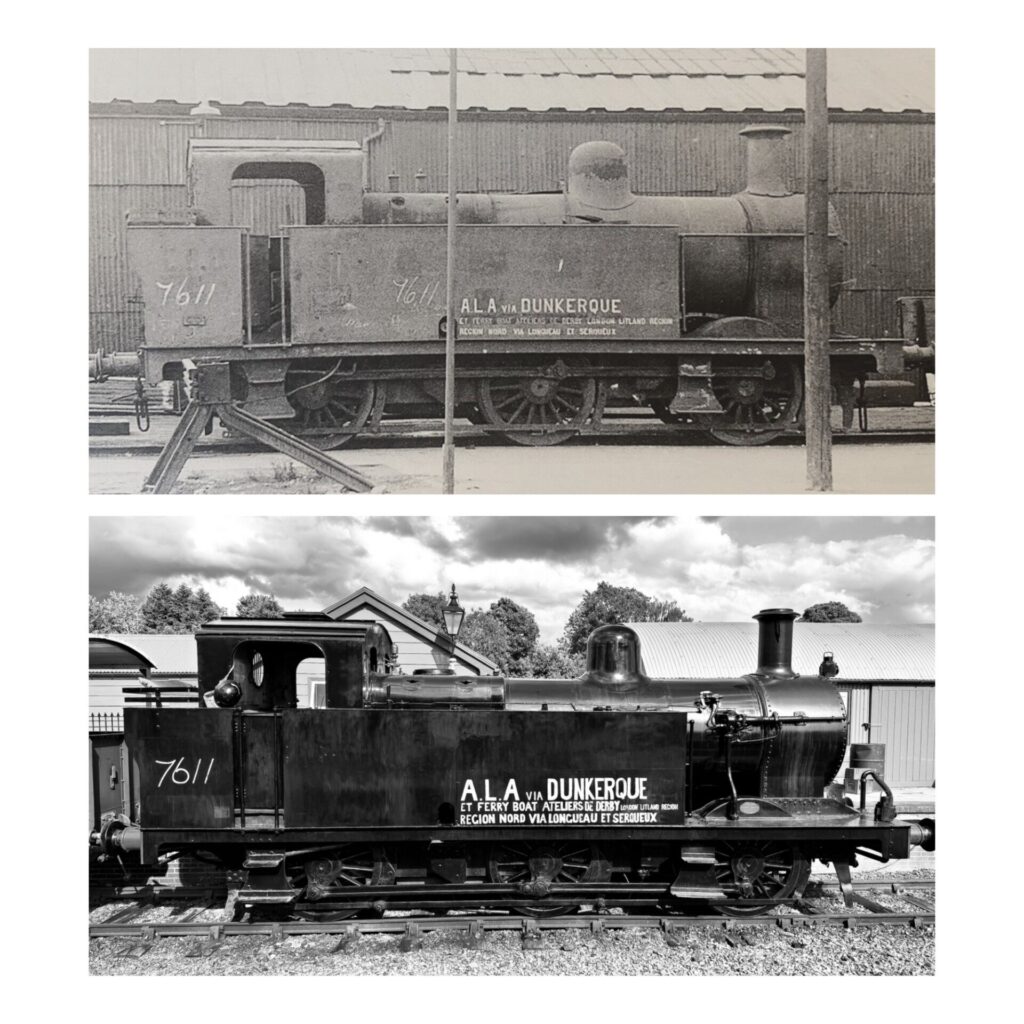
Of the eight exported, the best side-on view, ideal for recreation, was of No. 7611, complete with “A.L.A via Dunkerque” markings denoting its export.
With permission from the SVR and one of the locomotive’s owners, Frank Cronin, we acquired a large roll of glossy black vinyl sheet. Using the measurements of a Jinty side tank, I laid everything out on the patio floor, drew and painted the lettering, and applied it to the locomotive using a layer of petroleum jelly to protect the paintwork.
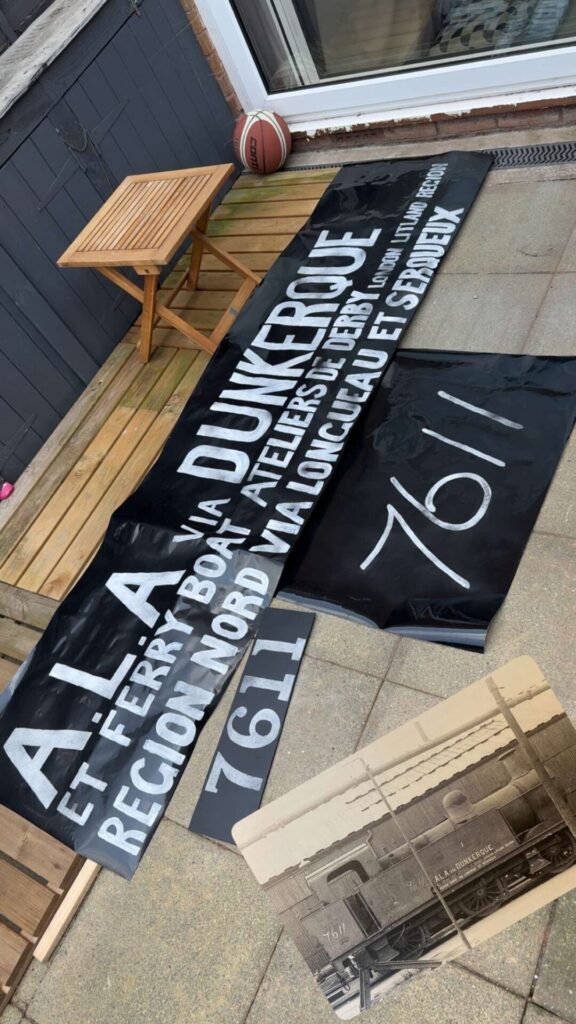
After laying the vinyl out on the patio floor, with the measurements of a Jinty side tank to hand, the lettering was all drawn out and painted. Then it was applied to the loco with a layer of petroleum jelly in order for the vinyl adhesive to not damage the paintwork when removed.
The smokebox number plate was crafted from plywood, painted, and bolted over the existing BR plate, which isn’t removable. The shed plate was covered with another piece of vinyl.

To complete the transformation, the main platform viewing side of the loco was treated with a thin layer of petroleum jelly and painted with watered-down grey and black poster paints. This dulled the high-gloss museum finish to give it a more time-accurate finish, that is easily wiped clean after the event. The final touch is my pair of WD loco lamps which were placed in various positions on the front of the loco during the event.
I’d like to take this opportunity to thank those that helped with the transformation, Chris Murkett, Henry Hughes, Evan Bradshaw and Charlie Cooke plus my good lady Dawn for planting the idea in my head.

As for next year – how do we top this? Who knows! But if this has taught us anything, it’s that there is always another fantastic story to be told.